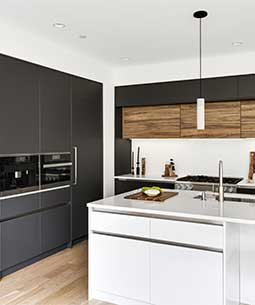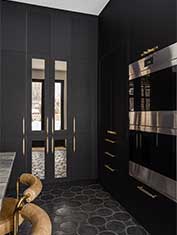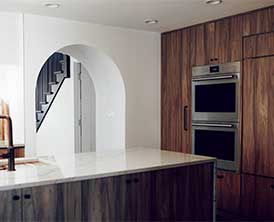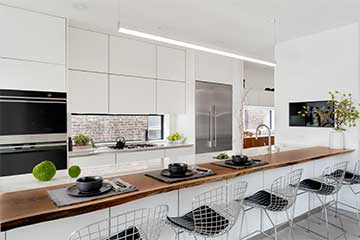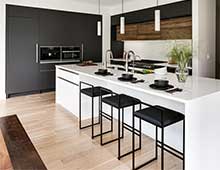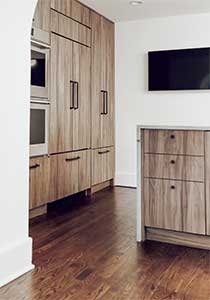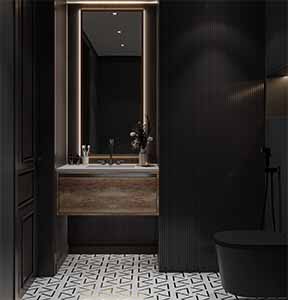

The clean-line revolution is here — and it's rewriting the rules of kitchen style.
If you've been scrolling through kitchen inspiration lately, you've noticed the shift. Gone are the days of ornate, heavy cabinetry competing for attention. In 2026, the kitchen has become a gallery — and European frameless cabinets are the masterpiece at its center.
According to the National Kitchen & Bath Association's (NKBA) 2026 Kitchen Trends Report — a survey of over 634 industry professionals — frameless cabinet construction is experiencing unprecedented growth across all market segments. And it's not hard to see why.
What Makes European Frameless Cabinets Different?
Traditional American-style cabinets use a face frame — a hardwood border (rails and stiles) mounted to the front of the cabinet box. Doors and drawers attach to this frame. It's sturdy and familiar, but it comes with trade-offs: less interior space, visible frame edges, and an aesthetic that leans heavily traditional.
Frameless cabinets eliminate that face frame entirely. The doors and drawer fronts mount directly to the cabinet box, creating:
- Seamless, uninterrupted surfaces that emphasize clean horizontal lines
- 10-15% more usable interior storage — no frame blocking access to corners
- Full-overlay fronts that align perfectly edge to edge
- A modern, architectural aesthetic that feels intentional and curated
Think of it this way: face-frame cabinets are a picture in a heavy gilt frame. Frameless cabinets are a museum-quality print mounted flush to the wall. Both display art — but one lets the art speak for itself.
Why 2026 Is the Year of Frameless
1. The Quiet Luxury Movement Has Hit the Kitchen
The same design philosophy driving fashion and interior trends — understated quality over loud branding — is reshaping cabinetry. Homeowners want kitchens that whisper craftsmanship, not shout decoration.
Frameless cabinets deliver this effortlessly. When paired with matte finishes, integrated finger pulls, or touch-to-open mechanisms, they create surfaces so clean they look built into the architecture itself.
2. Open-Plan Living Demands Visual Harmony
With kitchens increasingly open to living and dining areas, cabinetry needs to work as furniture-grade design, not just functional storage. European frameless construction achieves this by:
- Eliminating visual clutter between cabinet doors
- Supporting handleless designs that double as sleek wall panels
- Enabling floor-to-ceiling installations that feel built-in rather than bolted-on
3. Color and Material Trends Favor Clean Canvases
The NKBA reports that 96% of design professionals identify warm neutrals as the dominant palette for 2026. Deep wood tones, rich espresso, forest green, and matte black are all surging.
These bold, confident colors need room to breathe — and frameless cabinets provide exactly that. Without frame edges breaking up the surface, each color choice reads as one continuous, intentional statement.
4. Smart Storage Needs Smart Construction
Modern kitchens demand more from every square inch. Pull-out pantry systems, deep pot drawers, integrated organizers, and hidden appliance garages all work better in frameless boxes because:
- Full-extension drawer slides aren't obstructed by a face frame
- Corner cabinets offer maximum accessible space
- Roll-out shelves install more easily and sit flush
What About Durability?
One common concern: without a face frame, are frameless cabinets less sturdy? The short answer is no — when they're built right.
High-quality European frameless cabinets use thick cabinet sides (typically 3/4 inch), precision hardware, and engineered construction that distributes weight evenly. The key is the quality of materials and craftsmanship, not the presence of a frame.
In fact, many premium European kitchen manufacturers have used exclusively frameless construction for decades. It's not a trend there — it's the standard.
Side-by-Side Comparison
| Feature | Face-Frame Cabinets | European Frameless |
|---|---|---|
| Interior access | Partially blocked by frame | Full, unobstructed access |
| Storage capacity | Standard | 10-15% more usable space |
| Aesthetic | Traditional to transitional | Modern, sleek, architectural |
| Hardware | Standard hinges | Concealed European hinges |
| Drawer capacity | Limited by frame opening | Larger drawer boxes |
| Installation | Traditional methods | Precision-engineered systems |
How to Get Started
Considering European frameless cabinets for your next kitchen project? Here's what to keep in mind:
- Work with a specialist. Not all cabinet companies build true frameless construction. Look for manufacturers with European cabinetry expertise and precision CNC capabilities.
- Invest in quality hardware. The magic of frameless cabinets lives in the hinges, slides, and lift systems. Premium European hardware (like Blum or Hettich) makes the daily experience exceptional.
- Think about the full picture. Frameless cabinets look best when the entire kitchen is designed as a cohesive system — countertops, backsplash, lighting, and cabinetry working together as one statement.
- Don't forget function. The beauty of frameless is that it's as practical as it is beautiful. Plan your interior storage accessories (pull-outs, dividers, lazy susans) during the design phase, not after.
The Bottom Line
European frameless cabinets aren't just a 2026 trend — they're the future of kitchen design. They offer more storage, cleaner aesthetics, better functionality, and a timeless look that won't feel dated in five years.
The kitchen is evolving from a workspace to a living space. And frameless cabinetry is what makes that transformation possible.